
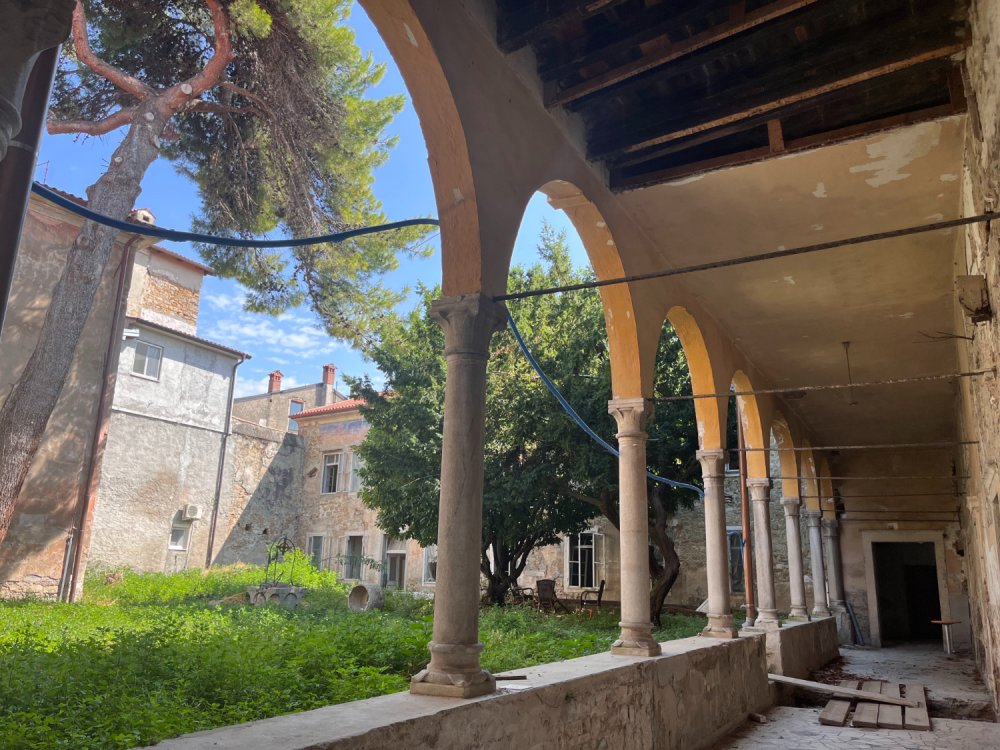
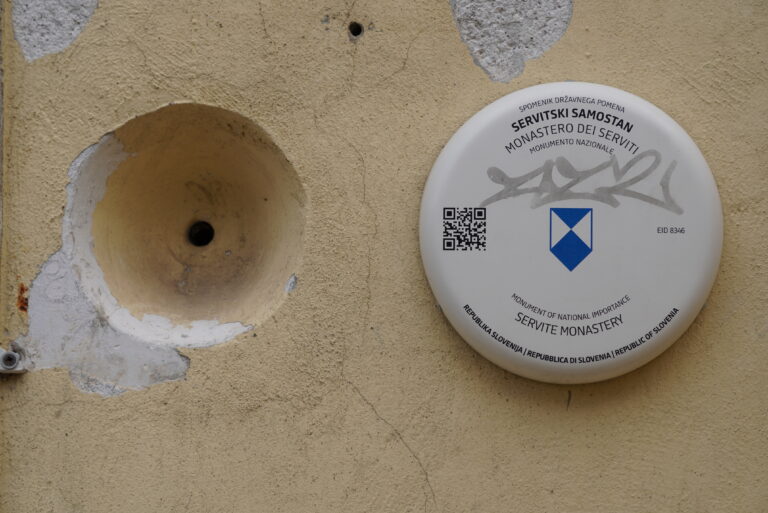
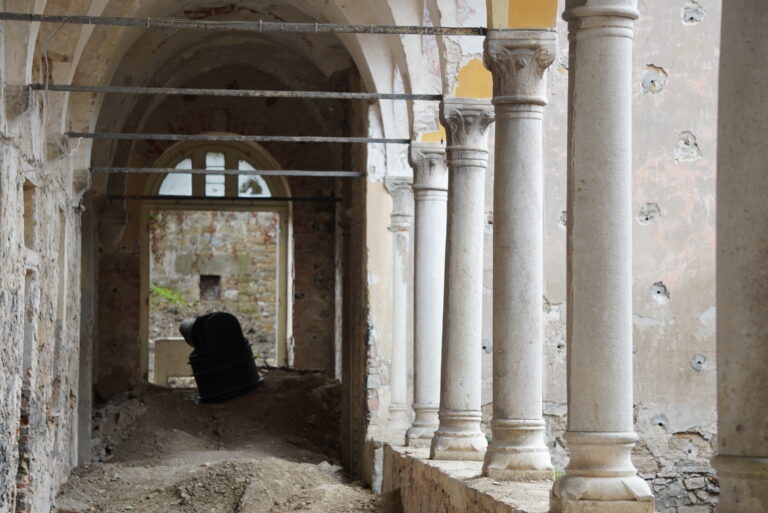
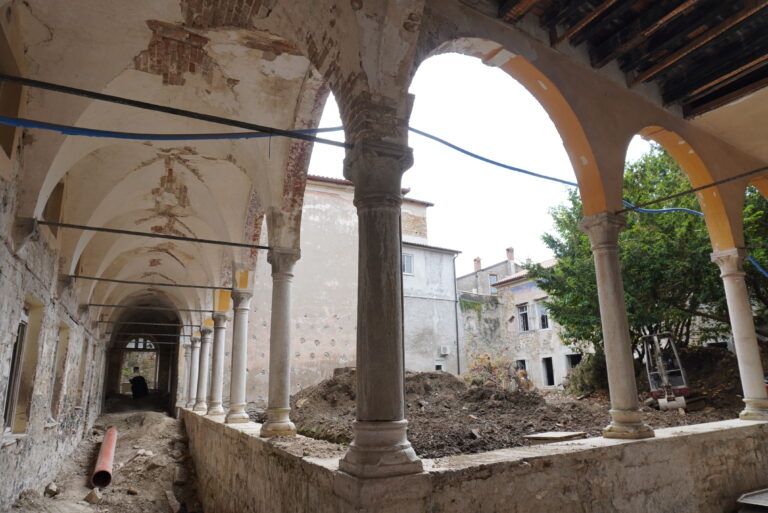
The monastery is the only surviving complex of the Servite Order in the whole of Istria. There’re several layers in the structure of the building: a Roman seaside villa, a high medieval Benedictine monastery, a modern Servite monastery, a 19th century town hospital or ospedale civico. The building was used as the provincial maternity hospital from the time after the Second World War, but since 1997 it was emptied. The UP took over its management in 2011, but the renovation did not start until 2020. The planned new use after the renovation: the Rector’s Office, a congress hall, lecture halls and several research centres for the purpose of promotion and contact with the wider public.
This renovation is an example of an integrated approach to heritage, as it is based on interdisciplinarity and integration with different stakeholders. It is being developed in close cooperation between various UP experts, the InnoRenew Centre of Excellence and the ZVKDS. The research to date has covered: Historical and architectural-historical analysis of the development of the building; thermographic recording of the structures; 3D scanning and existing condition recording; archaeological investigations in several phases (2011, 2022, 2024); probing of the walls and plaster (2011, 2022); structural verification 2022 (InnoRenew); geomechanical verification (InnoRenew); fungal analysis of the wooden structure 2024 (InnoRenew); and ethnographic research on the development and significance of the building for the local community (2012-2024).
The ethnographic research of the UP FHŠ team shares the core values of the “people-centred approach” in conservation, that has been promoted in recent years by key policies and strategies, such as the New European Bauhaus – NEB, namely the collaboration with the community (“together”) and across disciplines. The first phase of this research dates back to 2012 when the Servite monastery was one of the main case studies of the “I’m telling the Story of the town” initiative. The complex history of Istria and its post-war population changes led to the urge to make this kind of conservation project as collaborative and inclusive as possible. Within the initiative one event of memory talk, entitled “Common Birthplace”, was dedicated to the convent-maternity hospital, in conjunction with a growing exhibition. Here, former employees as well as those who were born in the facility exchanged memories of the site and of the city. Then, in May 2024, a presentation of the renovation process to the local public was organized. Three memory events were held then, each attended by more than 80 participants. In September a round table on midwifery past and present was organized, also to promote the inscription of midwifery on the UNESCO Intangible Heritage Register.
As an example of best practice, the renovation process, together with the community aspect in a “memory room”, will be presented in a permanent exhibition in the renovated building. A number of programmes and spaces will be open to the public to meet the community. In the meantime, the building also remains a HERITAGE LIVING LAB: for students of the different courses of our programmes and other interested parties; as well as a training ground for various training courses, such as a workshop on the production of lime plasters (in cooperation with the School of Renovation).