Across four episodes, it presents the eastern Adriatic as a living archive of civilisations – from Neanderthals to Bronze Age communities, Iron Age kingdoms, Roman expansion, and contemporary archaeological discoveries. By weaving together scholarly insights from archaeology, art history, and history with modern technology, the series portrays the Adriatic as one of the key crossroads of European civilisations and as a sea of memory where past and present are in constant dialogue.
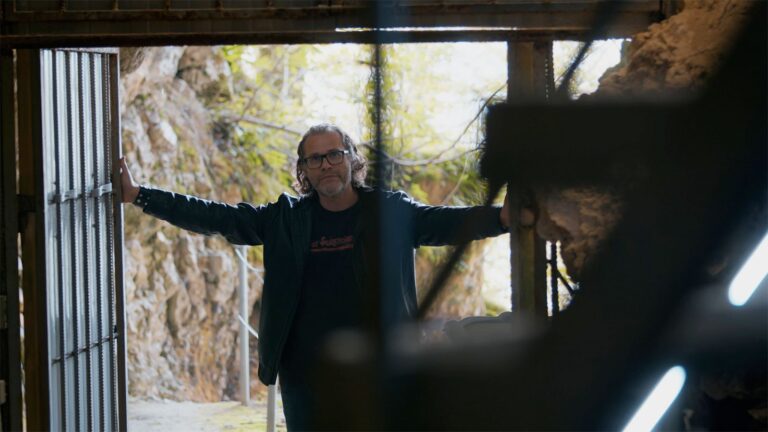
In the first episode, Prof. dr. Boris Kavur examines an extraordinary archaeological discovery from the Divje Babe cave above the Idrijca River near Cerkno, where exactly thirty years ago a bone flute approximately 60,000 years old was uncovered. The find, attributed to Neanderthals, sparked one of the most intense and widely discussed archaeological debates on the origins of music, symbolic thought, artistic expression, and the cognitive and cultural capacities of early human populations. The debate extends beyond the interpretation of a single artefact, raising fundamental questions about the development of symbolic behaviour, communication, and social complexity in the Palaeolithic.
In the second episode, Assoc. Prof. dr. Martina Blečić Kavur presents life in Istria during the 2nd and 1st millennia BCE, with particular emphasis on the emergence of protourban and hierarchical communities. This development is set within a broader context of social, economic, and ideological transformations in the area between Pannonia, the Alps, and the Mediterranean. She highlights the Bronze Age settlement of Monkodonja near Rovinj, considered one of the best-researched sites on the eastern Adriatic, and presents key results of extensive international research projects in which she has participated. Special attention is given to questions of identity, social organisation, and symbolic practices as reflected in the material culture of the Histri, especially the Situla art from Nesactium, which is one of the most significant expressions of prehistoric visual art in the northern Adriatic.
Photographs: Livada Produkcija©2025