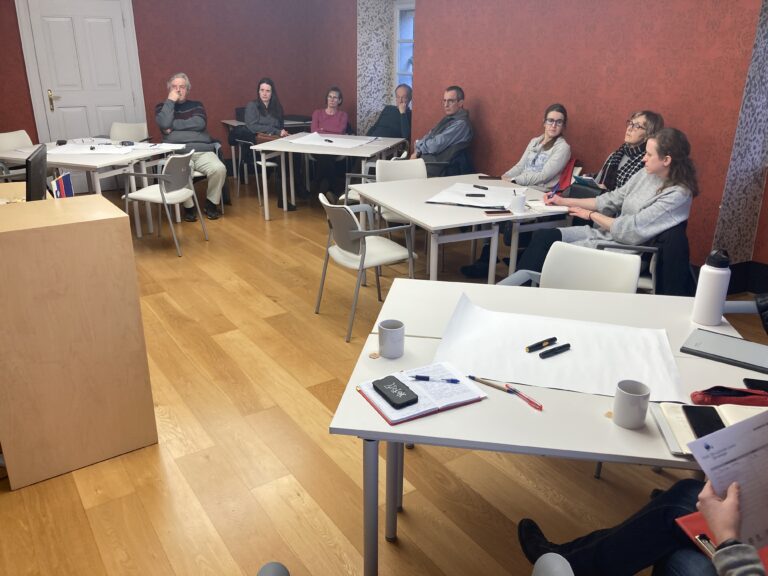
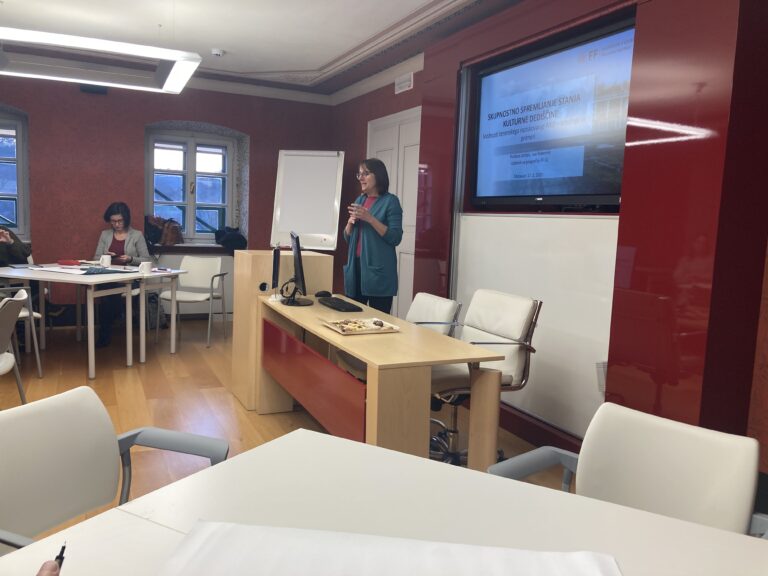
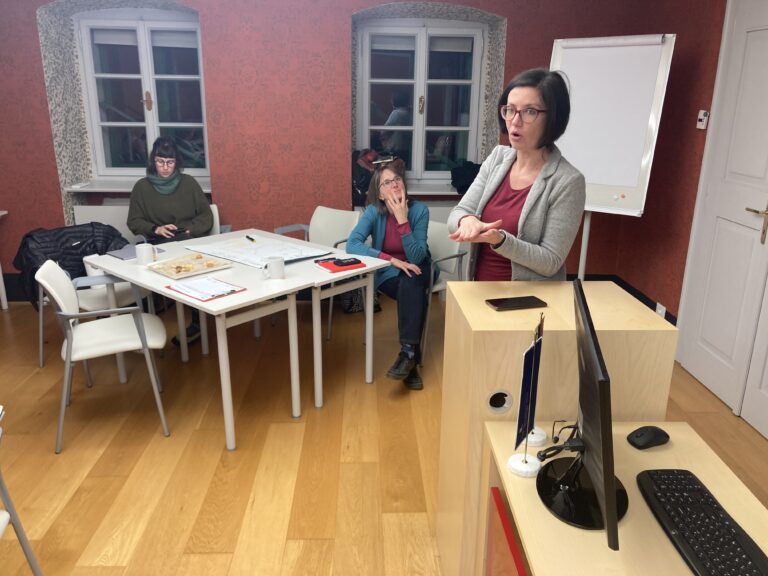
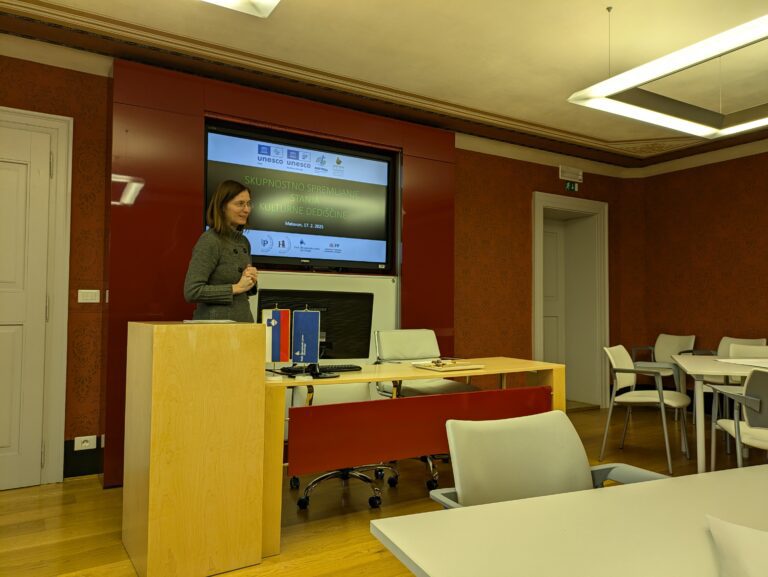
The core of the event was dedicated to the presentation of the approach and methods for monitoring the condition of degraded areas, especially areas with heritage, which have been developed for many years at the Department of Geography of the Faculty of Arts of the University of Ljubljana. Assist. Prof. Barbara Lampič (UL FA) and her colleague Asst. Leo Rebernik presented the tool (web application) and the recent results of a campaign of this type of recording, which was carried out in 2024 with students of UL FF.
The research showed interesting statistical data on the preservation of immovable cultural heritage, especially the most endangered types of heritage (domestic/homesteads in the countryside, privately owned, protected as heritage). With the presentation for the ŠCP councilors, we wanted to present primarily the approach to monitoring the condition, to which members of the local community can also make a significant contribution – in the spirit of so-called “citizen science” and thus contribute to monitoring the condition of heritage in the long term. These aspects were presented at the event by Assist. Prof. Neža Čebron Lipovec (UP FHŠ) and emphasized the crucial importance of the community that lives nearby and in daily contact with heritage, and therefore can significantly contribute to its maintenance by monitoring the state of preservation, in the spirit of preventive conservation.
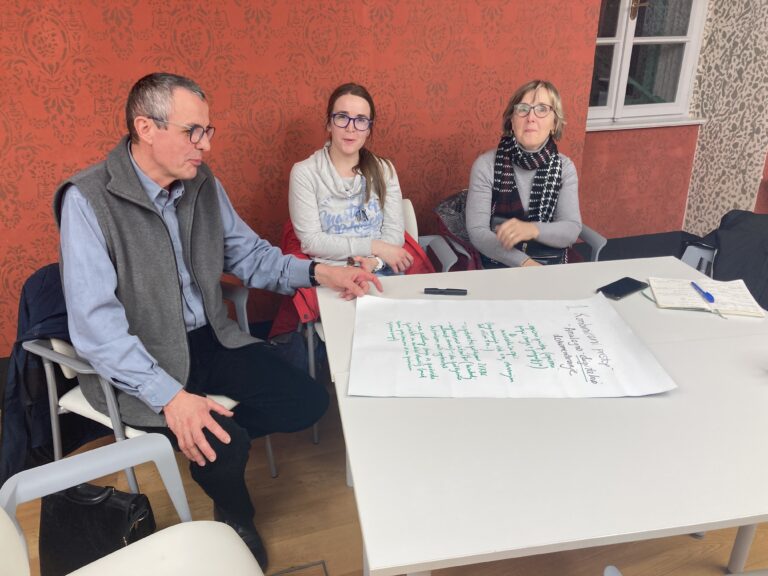
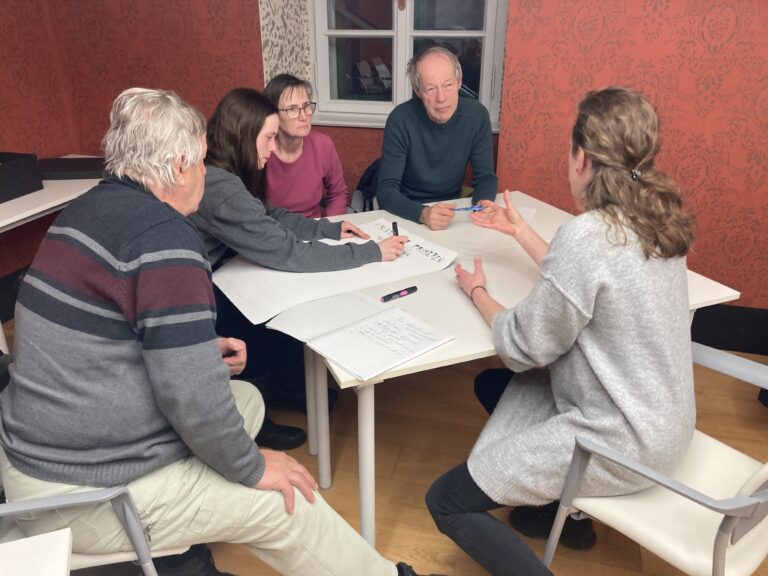
At the workshop, which was led by ethnologist Darja Kranjc (ŠCP) together with archaeologist and expert Špela Prunk (Regional Museum Koper), the experts then suggested how local communities in the biosphere area of the ŠCP could undertake this type of citizen-science action and record the state of conservation of the local immovable heritage.