
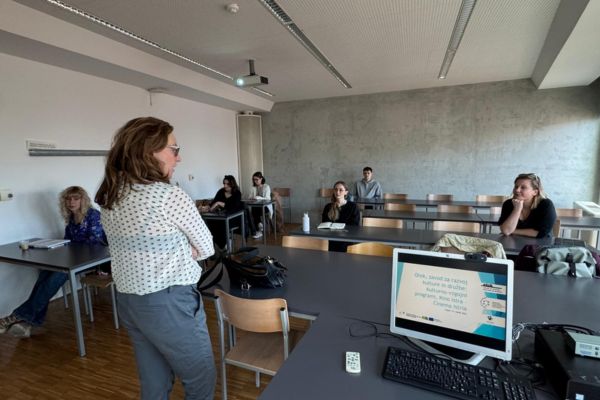
Seven students are participating in the project under the academic mentorship of Assist. Prof. Nikolai David Jeffs, PhD, and Assist. Aleksandra Melanšek. The project is being carried out in collaboration with the Otok Institute for Cultural and Social Development, under the workplace mentorship of the Institute’s Director, Lorena Pavlič.
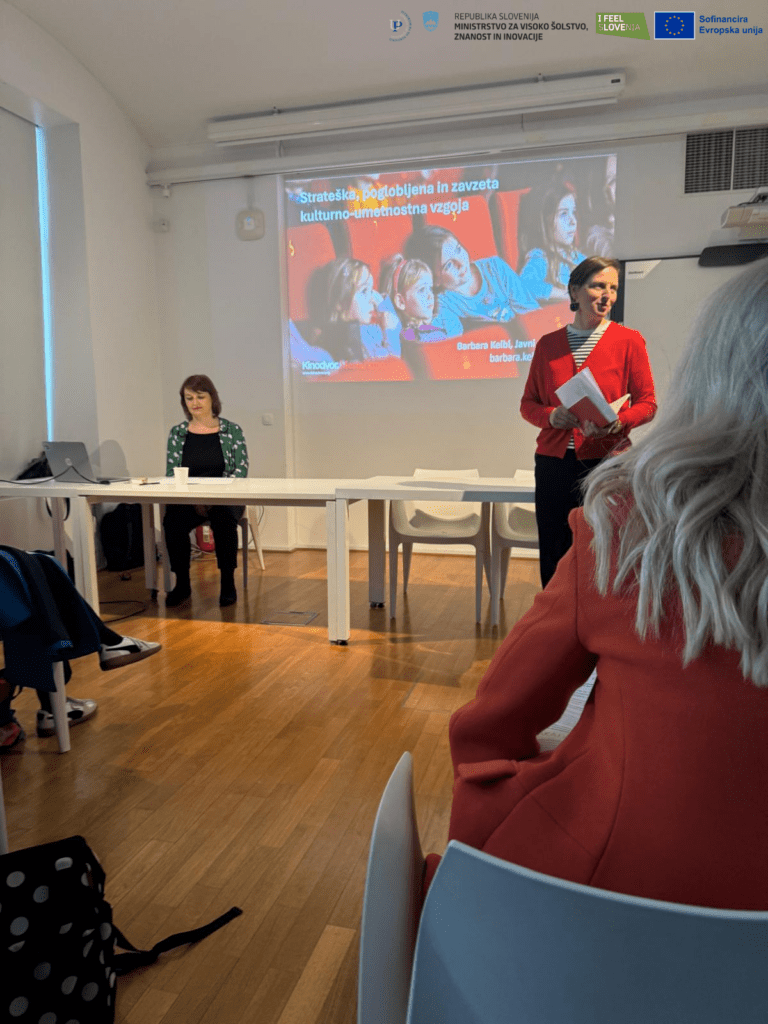
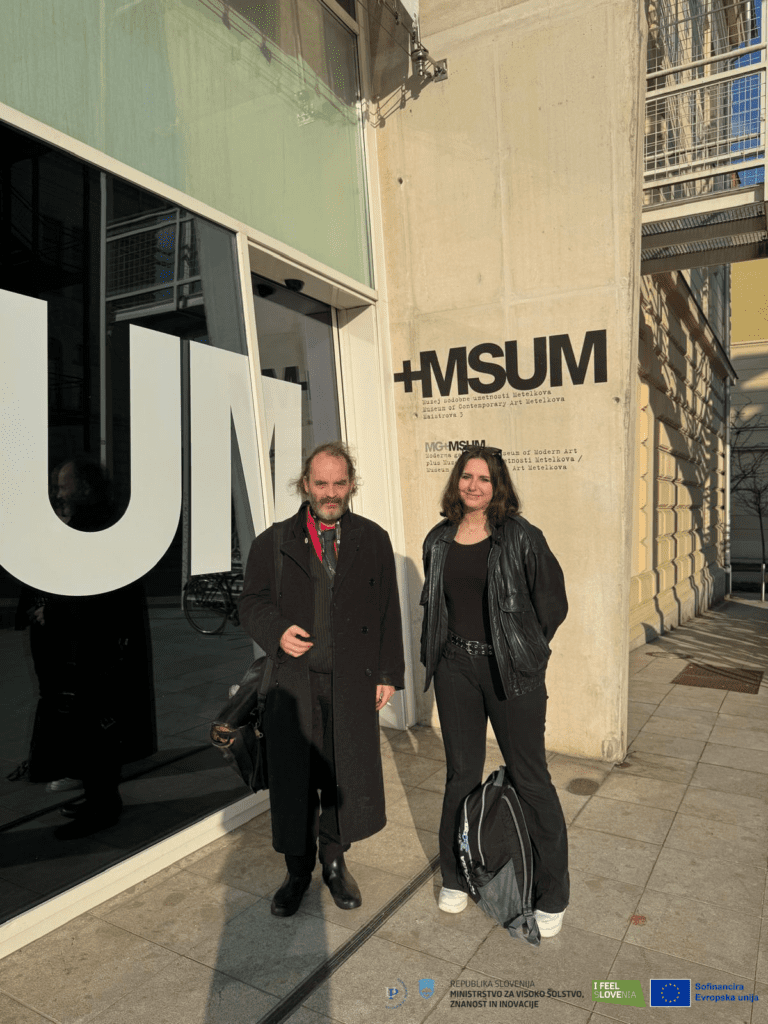
Our work has begun with two lectures at the Museum of Contemporary Art Metelkova in Ljubljana, held on 2 and 3 March 2026. Barbara Kelbl delivered the first lecture, titled Strategic, Comprehensive, and Committed Arts Education. During the lecture, she introduced Kinodvor City Cinema and its programmes and projects. Among these is Kinobalon, a programme that helps children develop a deeper understanding of film through creative activities and discussion.
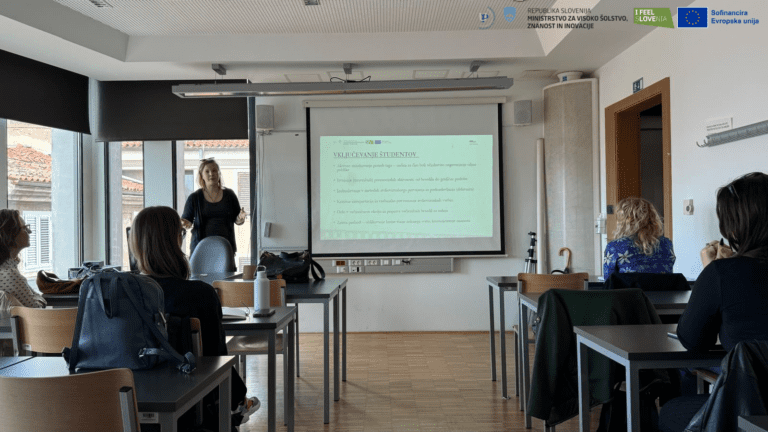
The second lecture, titled Young People, Cultural Participation, and Media Consumption, was delivered by Tanja Črnić Oblak, PhD. She presented a study conducted with primary and secondary school students on their most frequently used social media platforms. Based on the results, the researchers identified and named groups, describing the key patterns observed in children’s media use.
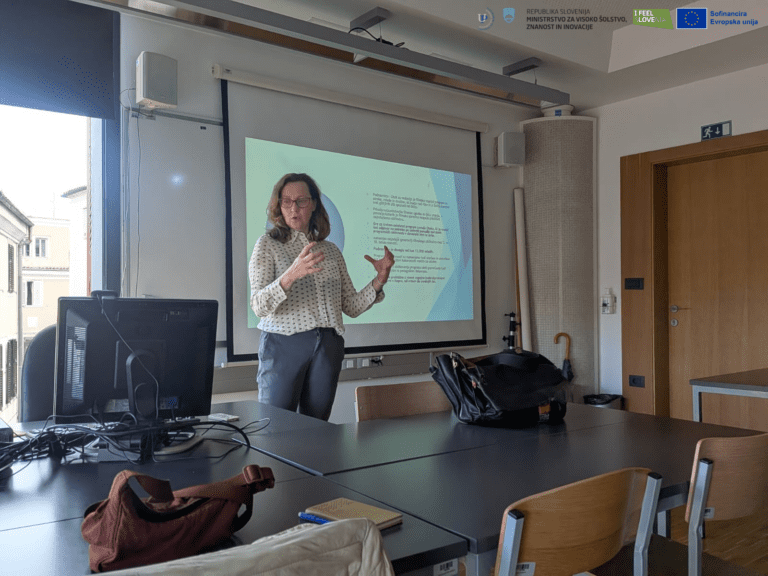
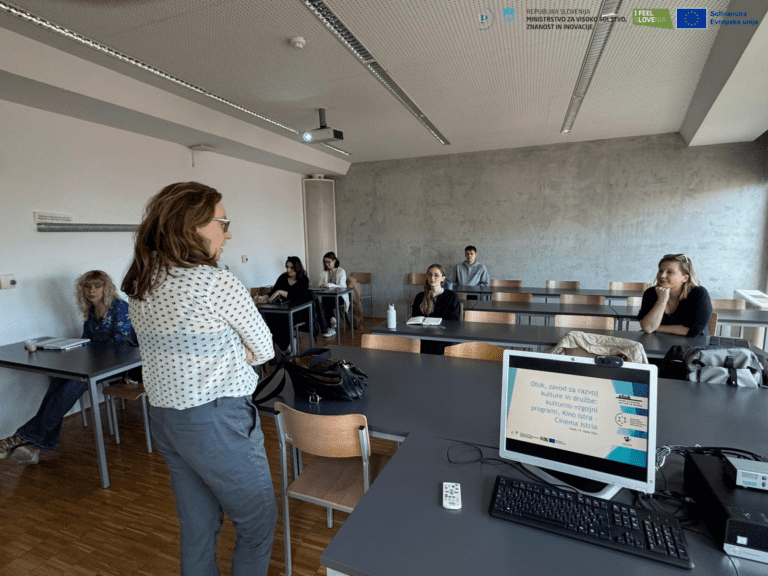
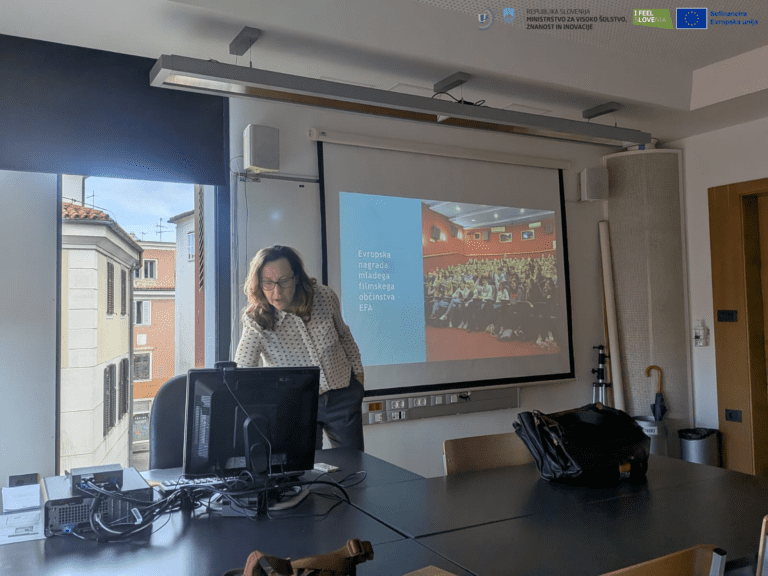
On 13 March 2026, a presentation of the Otok Institute and the project itself was held, followed by an introductory meeting that highlighted the Institute’s commitment to making cultural and artistic content accessible, particularly international independent films, through direct interaction between creators and audiences of all generations. Going forward, we will be co-creating programmes, including Submarine, a film education programme for children, youth, and families, and Kino Istra.
The discussion covered the various roles involved, what it takes for the project to succeed, and where each student sees their own contribution. With many exciting yet intensive experiences ahead, the students will have the opportunity to develop a range of skills and learn how to work together to achieve the desired result.
Written by: Kaja Stanič
Translated into English by: Anastasiia Chemerys

The operation is co-financed by the Ministry of Higher Education, Science and Innovation and the European Union through the European Social Fund Plus (ESF+).