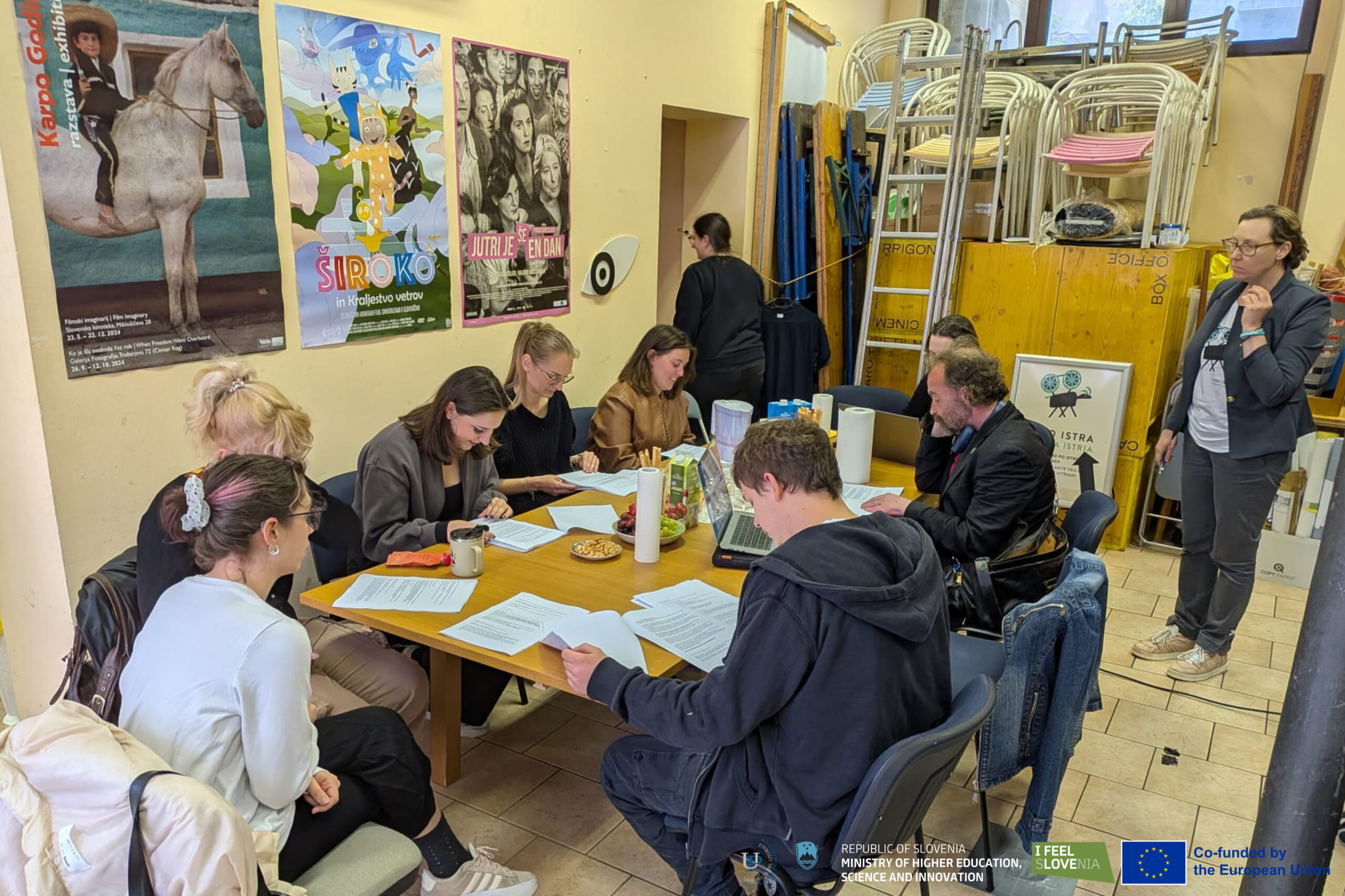
The students visited the project partner’s premises, where they were welcomed by the institute’s director, Lorena Pavlič, along with the coordinator of the Kino Istra programme, Meri Viler, and the production coordinator, Gaia Sluga. They introduced the main ideas behind the Kino Otok – Isola Cinema festival, the Moving Cinema, and the film education programme Submarine – Otok for Kids, while also sharing experiences and insights from activities carried out in previous years. Together with the students and academic mentors, Assist. Prof. Nikolai Jeffs, PhD, and Assist. Aleksandra Melanšek, they then outlined the basis for this year’s festival activities and a strategy for engaging target audiences, drawing on the students’ own experiences and the exchange of good practices among all stakeholders.
The session also introduced the students to this year’s film selection, key principles of film education, and the basics of writing film reviews. In the coming weeks, they will put this knowledge into practice by preparing reviews aimed at bringing cinema closer to young audiences — by young people, for young people.
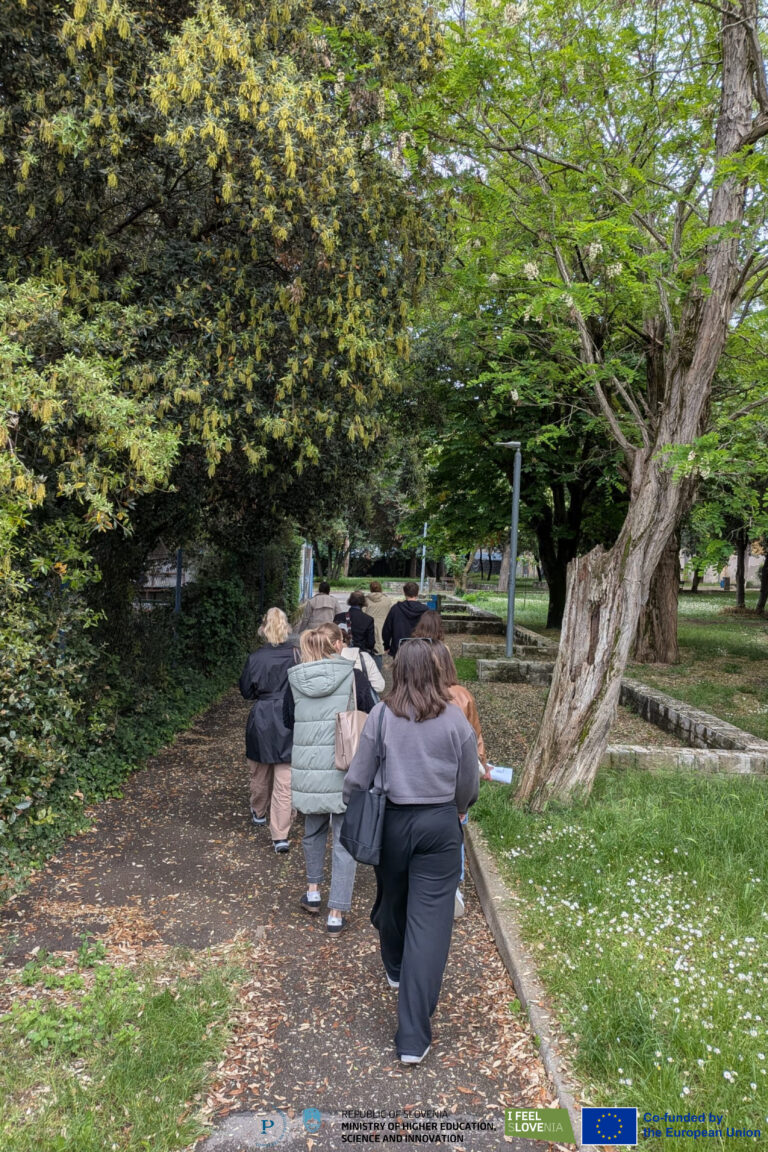
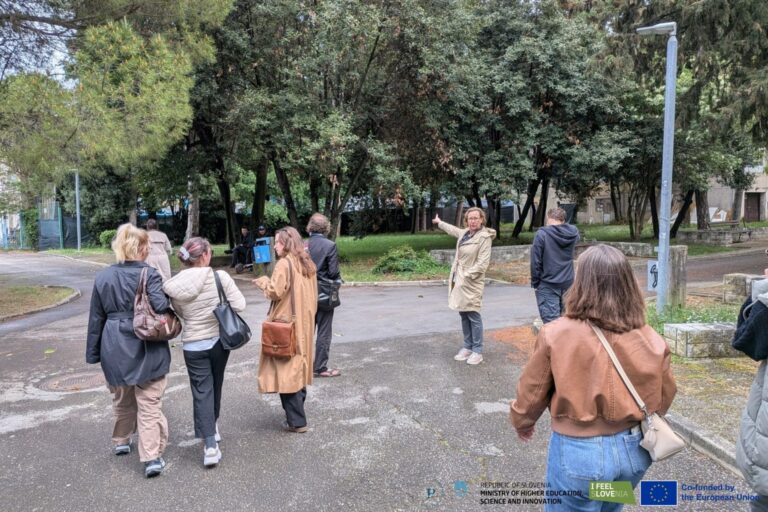
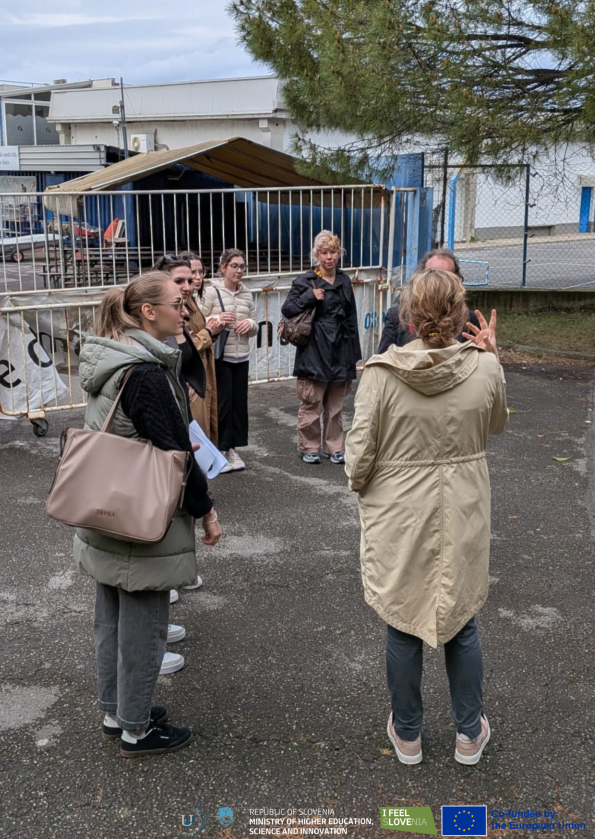
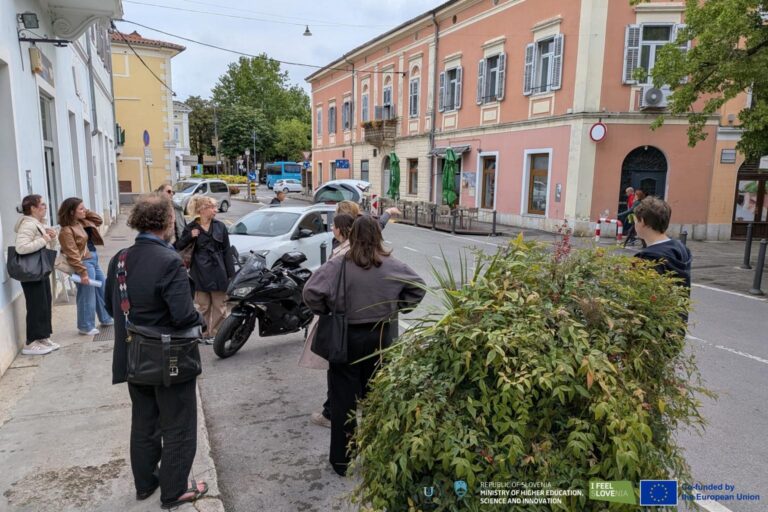
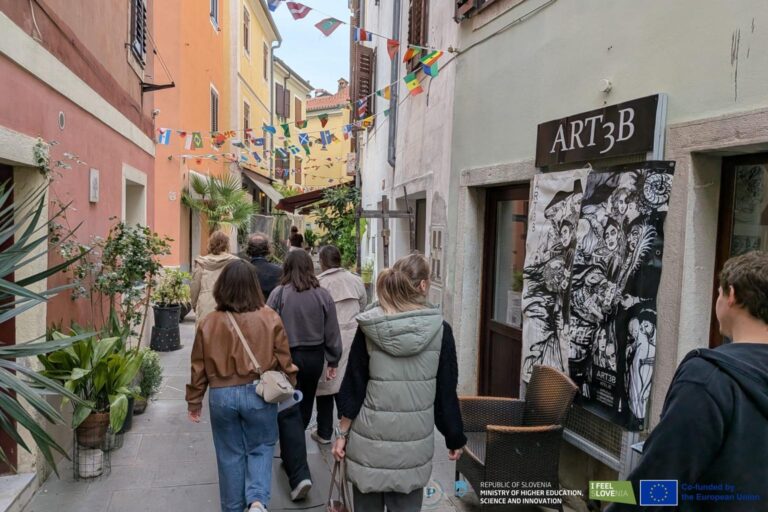
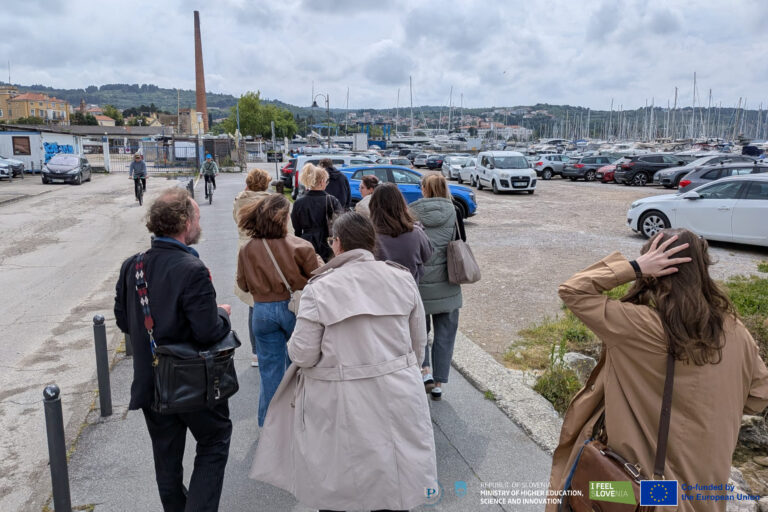
The visit ended with a walk through Izola and a tour of the venues where the festival activities will be held.
Translated into English by Anastasiia Chemerys

The operation is co-financed by the Ministry of Higher Education, Science and Innovation, and the European Union through the European Social Fund Plus (ESF+).