
Project Code: N5-0487
Project Type: Bilateral basic research
Project Team: dr. Neža Čebron Lipovec (leader), dr. Andreja Kutnar, dr. Michael David Burnard, Tim Mavrič
Partner Institution: Eötvös Loránd University, Budapest (ELTE)
Project Coordinator: Faculty of Humanities, University of Primorska (Slovenia)
Financing: Slovenian Research and Innovation Agency (ARIS)
Period: 1. 3. 2026 – 28. 2. 2029

The theoretical background originates in the attention restoration theory (ART, R. Kaplan & Kaplan, 1989) and the psycho-evolutionary theory of stress reduction (SRT, Ulrich, 1983). According to ART, experiencing certain environments has an effect to restore mental fatigue due to four characteristics that such settings comprise: being away, fascination, coherence, and compatibility (Kaplan & Kaplan, 1989). SRT states that the psychological recovery caused particularly by natural environments has clear positive physiological effects, resulting in reduced stress level, and increased well-being (Ulrich, 1983). While both ART and SRT are mostly associated with natural environments, there’s an emerging branch of literature on restorative urban environments and particularly historic settings.
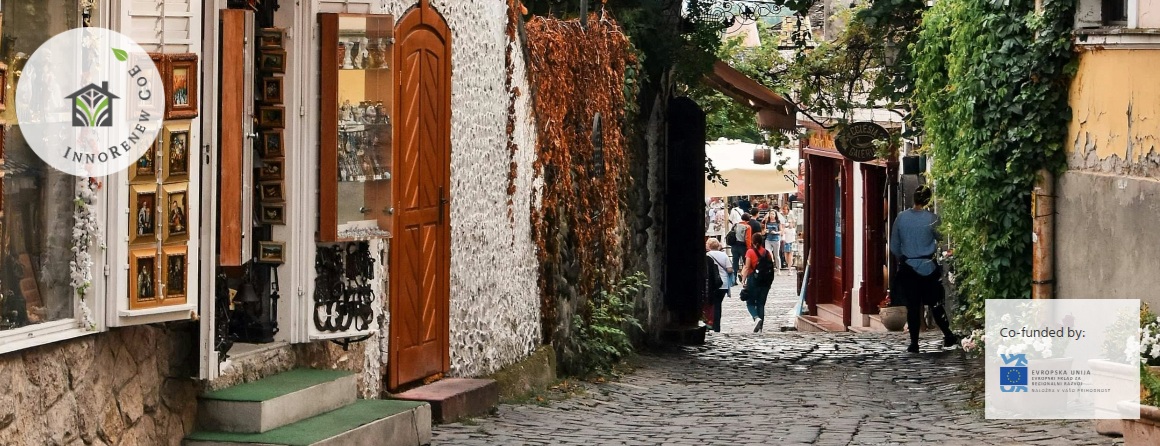
Taking these approaches further, we intend to examine restorative environments in both countries, specifically through the case studies of Izola/Isola in Slovenia and Szentendre in Hungary. Building on the expertise of the transnational and transdisciplinary research group, we will use both qualitative and quantitative data collection methods. The novelty in our research is that in addition to analysing the physical characteristics, accessibility and sensory impressions that influence the restorative process of various urban and historic settings, we intend to investigate individual differences, considering socio-economic status, preferences for different places, personality and value orientations, social significance assessments and attachment patterns. The investigation will encompass four major topics: (1) Built historic environment: heritage buildings, sites and cities; (2) The local urban context of the restorative environment: case studies in Hungarian and Slovenian small cities; (3) Multivocality and the qualities of historic space; (4) Space syntax analysis of the two cities.
The proposed project focuses on two key themes essential to the socio-economic and cultural development of Slovenia and Hungary: a sustainable, healthy, and pleasant living environment, and social inclusion and participation. Using a participatory methodology, the research will position Slovenia and Hungary as contributors to advancing knowledge on restorative spaces in environmental psychology. From a methodological perspective, we aim to develop a transdisciplinary approach that integrates methods from various fields—primarily psychology, architecture, urban studies, conservation, and material science. This approach will be applied to diverse environments, both historical and contemporary, urban and rural, while addressing the cognitive, affective, visual, and sensory dimensions of space, all within a participatory framework. The findings will have direct applications in heritage studies, architecture, and urban planning. Additionally, the proposed methods will provide valuable tools for decision-makers and investors in the built environment, enabling them to assess social needs, evaluate spatial qualities, and guide effective planning interventions.
The research will comprise four Work Packages:
WPI.: Preliminary desktop and field research
Rationalize the existing literature, identify the research options that provide the best tools for mapping restorativeness and select/develop the instruments to be used for the measurement. Carry out expert field observations and spatial analysis.
WPII.: Quantitative research
Identical online surveys in Slovenia and Hungary in both languages. Participants will assess first their favourite places then selected urban historic spaces with various spatial characteristics in terms of the perceived restorativeness. We will also ask about their socio-economic background and personality and value orientations.
WPIII.: Field research
Site specific field research in the selected towns in Slovenia (Izola/Isola) and Hungary (Szentendre). We will attempt an experimental method (working term “transgenerational sensorial and memory group talk&walk”) that merges methods of researching the qualities and values of historic space, the “group memory talk”, with “walking methodologies” used in sensorial anthropology.
WPIV.: Dissemination
Transmit research results targeting project partners and academic staff; project participants; and the general public.
References
Kaplan, R., & Kaplan, S. (1989). The experience of nature: A psychological perspective. Cambridge University Press.
Murray, L., & Järviluoma, H. (2020). Walking as transgenerational methodology. Qualitative Research, 20(2), 229-238.
Ulrich, R. S. (1983). Aesthetic and Affective Response to Natural Environment. In Behavior and the Natural Environment (pp. 85–125). Springer US. https://doi.org/10.1007/978-1-